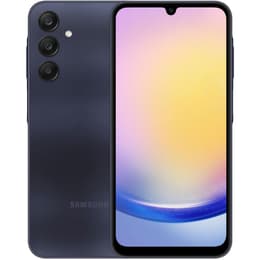
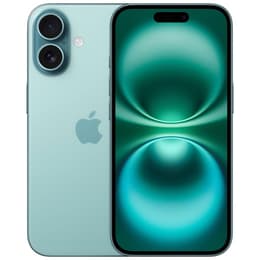
Galaxy A25 vs iPhone 16

Galaxy A25
Galaxy A25
À partir de

Prix reconditionné :164,00 €

contre 319,11 € neuf

Voir les options
iPhone 16
iPhone 16
À partir de

Prix reconditionné :549,00 €

contre 869,00 € neuf

Voir les options

Notes

The Samsung Galaxy A25, released in late 2023 and early 2024, and the Apple iPhone 16, launched in late 2024, represent distinct approaches to smartphone design and functionality. While the Galaxy A25 operates on the Android platform, offering a customizable experience, the iPhone 16 runs on Apple's iOS, known for its integrated ecosystem. These devices cater to different user preferences, primarily differing in their operating systems and the overall performance capabilities they offer.

Scores

Durabilité

When considering the longevity of these devices, several factors come into play, including their release timelines, software support, and physical durability.

  • Release Timeline: The Galaxy A25 was introduced in late 2023 and became widely available in early 2024, making it a slightly older model compared to the iPhone 16, which debuted in late 2024. This difference in release dates impacts their respective software support cycles.
  • Software Longevity: Samsung commits to four years of operating system updates and five years of security updates for the Galaxy A25, providing a solid period of software relevance. The iPhone 16, typical of Apple devices, is expected to receive iOS updates for a longer duration, generally five to six years or more, extending its functional lifespan. [1, 5, 11, 16, 31]
  • Durability Features: The iPhone 16 features Ceramic Shield protection on its display and boasts an IP68 rating for dust and water resistance, contributing to its resilience against daily wear and tear. [5, 21] The Galaxy A25, while featuring a sturdy plastic body, does not have an official IP rating, suggesting a different level of protection against environmental elements. [16, 18]

Année de sortie

2023

2024

Compatible dernière mise à jour

Oui

Oui

Pliable

Non

Non

Performances

The performance of a smartphone is crucial for daily tasks, from app usage to multitasking and gaming. Both devices offer capable performance, though they achieve it through different hardware configurations.

  • System Responsiveness: The iPhone 16 is equipped with a current-generation processor and an increased amount of RAM, resulting in swift app loading, smooth transitions between applications, and efficient handling of demanding games. [2, 9, 14, 20, 23] Users report a consistently fast and fluid experience. The Galaxy A25, powered by its own processor, manages everyday tasks like web browsing and media playback without significant issues. [1, 13] However, some users have noted occasional sluggishness, particularly when compared to higher-end devices or during intensive multitasking. [16, 18, 29]
  • Multitasking and Storage: With its enhanced processing power and additional RAM, the iPhone 16 provides ample headroom for running multiple applications simultaneously and managing complex workflows. [2, 14] The Galaxy A25 offers various storage options and includes a microSD card slot, allowing users to expand storage up to 1TB, which is beneficial for those who require extensive local storage for media and files. [1, 15, 24, 38]
  • Battery Behavior: The Galaxy A25 features a larger battery capacity, often providing a full day of use for many users. [1, 9, 13, 16, 30, 31] The iPhone 16, despite having a smaller battery capacity, is optimized for efficient power consumption, also typically delivering a full day of battery life under moderate usage. [2, 9, 20, 23]

Mémoire (Go)

6 Go

8 Go

Qualité de l'écran

The display is a primary interface for smartphone interaction, and both the Galaxy A25 and iPhone 16 offer vibrant viewing experiences with distinct characteristics.

  • Display Technology and Clarity: The Galaxy A25 features a 6.5-inch Super AMOLED display, known for its deep blacks and rich, vibrant colors, providing a clear and engaging visual experience for media consumption and daily use. [1, 10, 12, 13, 16, 30, 31, 38] The iPhone 16 comes with a 6.1-inch Super Retina XDR OLED display, which also delivers excellent contrast, accurate colors, and sharp detail. [2, 5, 21, 27]
  • Brightness and Refresh Rate: Both devices offer good brightness levels. The Galaxy A25 can reach a peak brightness of 1000 nits, making it generally visible outdoors, though direct sunlight can still pose a challenge. [1, 12, 13] The iPhone 16 boasts higher peak brightness, reaching up to 2000 nits, which enhances visibility in very bright conditions. [2, 21, 27] The Galaxy A25 features a 120Hz refresh rate, contributing to smoother scrolling and a more fluid visual experience. [1, 12, 13, 16, 30, 31] The iPhone 16 maintains a 60Hz refresh rate, which is consistent for everyday interactions but may not feel as fluid as higher refresh rate displays, especially for users accustomed to them. [2, 14, 21, 36]
  • Viewing Experience: The larger screen size of the Galaxy A25 offers a more expansive canvas for watching videos and browsing. The iPhone 16's display, while smaller, provides a compact and comfortable viewing experience with high pixel density for sharp images and text. [2, 5]

Résolution

1080 x 2340

1179 x 2556

Type d'écran

Super AMOLED

Super Retina XDR OLED

Audiovisuel

The camera systems on both smartphones are designed to capture moments, but they differ in their configurations and photographic strengths.

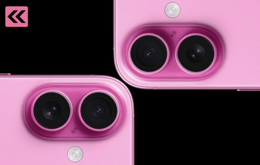
  • Rear Camera Capabilities: The Galaxy A25 features a triple-camera setup, including a 50-megapixel main sensor with optical image stabilization, an 8-megapixel ultra-wide lens, and a 2-megapixel macro lens. [1, 15, 24, 38] Its main camera performs well in good lighting conditions and is capable of capturing decent portraits. [1, 10, 11, 13, 16, 33] The iPhone 16 is equipped with a dual-camera system, featuring a 48-megapixel main sensor and a 12-megapixel ultra-wide lens. [5, 6] Its main camera is noted for excellent detail and quality, particularly in well-lit environments, and benefits from advanced computational photography. [14, 19, 20]
  • Low-Light and Video Performance: In low-light conditions, the Galaxy A25's main camera delivers average results, while its ultra-wide and macro lenses show limitations. [10, 13, 33] It supports 4K video recording at 30 frames per second, though stabilization is more effective at 1080p. [10, 11, 33] The iPhone 16 generally offers strong low-light performance and records video at 4K up to 60 frames per second with good image quality. [14]
  • Front Camera and Audio: Both devices feature capable front-facing cameras for selfies and video calls; the Galaxy A25 has a 13-megapixel sensor, and the iPhone 16 has a 12-megapixel sensor, both delivering good results. [1, 5, 6, 24, 33] For audio, the Galaxy A25 includes stereo speakers with good clarity and volume. [30] The iPhone 16 also provides a quality audio experience for media consumption and calls.

Caméra principale

50 megapixels

48 megapixels

Caméra frontale

13 megapixels

12 megapixels

Divers

Beyond core features, several practical elements contribute to the overall user experience of these smartphones.

  • Connectivity and Ports: Both devices support 5G connectivity for fast mobile data. The iPhone 16 includes Wi-Fi 7, offering advanced wireless networking capabilities, while the Galaxy A25 supports Wi-Fi 5. [1, 5, 14] The iPhone 16 features a USB-C port for charging and data transfer, along with MagSafe and Qi2 wireless charging. [5] The Galaxy A25 also uses a USB-C port for wired charging and data, and notably retains a 3.5mm headphone jack, which is absent on the iPhone 16. [16, 30, 31]
  • Biometric Security and Controls: The iPhone 16 relies on Face ID for secure facial recognition. The Galaxy A25 incorporates a side-mounted fingerprint sensor for biometric authentication. [16, 24] The iPhone 16 introduces an Action Button and a Camera Control button, offering customizable shortcuts and enhanced camera interaction. [9, 19, 26, 32]
  • Physical Characteristics: The iPhone 16 is generally more compact and lighter, with dimensions of 147.6 x 71.6 x 7.8 mm and a weight of 170g. [5] The Galaxy A25 is slightly larger and heavier, measuring 161 x 76.5 x 8.3 mm and weighing 197g. [15, 24] These differences can influence handling and pocketability.

Poids (en grammes)

197 g

170 g

Taille écran (pouces)

6.5

6.1

Réseau

5G

5G

Carte SIM

Double SIM physique

eSIM

Verrouillage opérateur

Débloqué tout opérateur

Débloqué tout opérateur

Connecteur

USB-C

USB-C (USB 2)

User feedback for the Samsung Galaxy A25 often highlights its vibrant AMOLED display, reliable battery life, and Samsung's commitment to software updates as strong points. [1, 16, 31] Some common criticisms include its average low-light camera performance and occasional performance lag, particularly for demanding tasks. [10, 16, 18] The iPhone 16 is frequently praised for its powerful processor, smooth performance, and high-quality main camera. [2, 9, 20, 23] Users sometimes express disappointment with the continued 60Hz display refresh rate and the perceived lack of significant innovation compared to previous iPhone generations. [2, 21, 36, 39, 40]

For users prioritizing a highly fluid operating system, robust performance for intensive applications, and a longer software support window, the iPhone 16 may be a more suitable choice. Its advanced camera features and premium build also appeal to those seeking a refined user experience. Conversely, individuals who value a larger, high-refresh-rate display, expandable storage, a headphone jack, and a strong commitment to software updates within the Android ecosystem might find the Galaxy A25 better suited to their needs. Both devices offer compelling features, and considering a quality-assured refurbished option for either model can provide an eco-friendly alternative for making an informed purchasing decision.

Découvrez tous nos articles

Nos comparaisons récentes