
Galaxy A56 vs Xiaomi Redmi Note 13

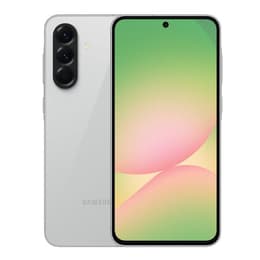
Galaxy A56
Galaxy A56
À partir de

Prix reconditionné :333,00 €

contre 502,00 € neuf

Voir les options
Xiaomi Redmi Note 13
À partir de

Prix reconditionné :144,00 €

contre 340,00 € neuf

Voir les options

Notes

The Samsung Galaxy A56, a smartphone released in March 2025, and the Xiaomi Redmi Note 13, launched globally in January 2024, represent two distinct options in the mid-range smartphone market. While both devices offer a modern Android experience, the Galaxy A56 generally provides a more recent hardware platform and extended software support, whereas the Redmi Note 13 focuses on a strong display and camera package for its segment.

Scores

Durabilité

When considering the long-term usability of a smartphone, factors like software support, physical durability, and repairability are key. The Galaxy A56, being a newer device, benefits from a longer expected support cycle and more robust build materials.

  • Software Longevity: The Samsung Galaxy A56 launched with Android 15 and is promised up to six years of operating system updates, ensuring it remains current with the latest features and security patches for an extended period. The Xiaomi Redmi Note 13, initially running MIUI 14 based on Android 13, has since been updated to HyperOS 2 based on Android 15, but typically receives a shorter duration of major OS updates compared to Samsung's mid-range offerings.
  • Physical Durability: The Galaxy A56 features an aluminum frame and is protected by Corning Gorilla Glass Victus+ on both its front and back, offering enhanced resistance against scratches and drops. It also boasts an IP67 rating, signifying strong resistance to dust and water immersion. In contrast, the Redmi Note 13 uses Corning Gorilla Glass 3 for its display protection and carries an IP54 rating, providing splash and dust resistance but less protection against immersion.
  • Expected Lifespan: Users prioritizing maximum software longevity and superior physical resilience against daily wear and tear will find the Galaxy A56 better suited for extended use. The Redmi Note 13, while durable for everyday scenarios, may see its software support end sooner and offers less robust physical protection.

Année de sortie

2025

2024

Compatible dernière mise à jour

Oui

Oui

Système d'exploitation

Android

Android

Pliable

Non

Non

Performances

The performance of a smartphone is largely determined by its internal components, influencing how smoothly applications run, how quickly tasks are completed, and the overall responsiveness of the user interface.

  • Processing Power: The Samsung Galaxy A56 is equipped with a 4nm Exynos 1580 processor, which provides a responsive experience for demanding applications and multitasking. This newer generation processor offers notable improvements in efficiency and graphics performance compared to its predecessor. The Xiaomi Redmi Note 13 is powered by a 6nm Snapdragon 685 processor, which handles everyday tasks and light gaming smoothly.
  • System Responsiveness: The Galaxy A56 benefits from its more advanced processor and UFS 3.1 storage, contributing to faster app loading times and a more fluid overall system experience. The Redmi Note 13, with its UFS 2.2 storage, offers good responsiveness for its class, but may exhibit slightly slower data transfer speeds. Both devices offer configurations with 8GB of RAM, which is sufficient for managing multiple applications simultaneously.
  • Battery Behavior: Both smartphones feature a 5000 mAh battery capacity. The Galaxy A56 has demonstrated excellent battery endurance in real-world tests, often lasting nearly two days with mixed usage and supporting 45W fast charging. The Redmi Note 13 also provides reliable all-day battery life and supports 33W fast charging.

Mémoire (Go)

8 Go

8 Go

Qualité de l'écran

The display is a primary interface for smartphone interaction, and its quality significantly impacts the viewing experience for media consumption, browsing, and daily use.

  • Display Technology and Clarity: Both the Samsung Galaxy A56 and the Xiaomi Redmi Note 13 feature a 6.7-inch (A56) or 6.67-inch (Redmi Note 13) Super AMOLED or AMOLED display, respectively, offering vibrant colors and deep blacks. Both screens provide Full HD+ resolution (1080x2340 for A56, 1080x2400 for Redmi Note 13), ensuring sharp visuals for typical viewing distances.
  • Brightness and Smoothness: The Galaxy A56's display can reach a peak brightness of 1900 nits, with a High Brightness Mode (HBM) of 1200 nits, making it highly visible even in bright outdoor conditions. The Redmi Note 13 also offers impressive brightness, with a peak of 1800 nits and an HBM of 1000 nits. Both devices feature a 120Hz refresh rate, contributing to smoother scrolling and a more fluid user experience.
  • Viewing Experience: The Galaxy A56's display supports HDR10+, enhancing contrast and color range for compatible content. The Redmi Note 13 also offers a wide color gamut and features like a circadian rhythm adjustment for eye comfort.

Résolution

1080 x 2340

1080 x 2400

Type d'écran

Super AMOLED

AMOLED

Audiovisuel

The camera systems on both devices aim to capture quality photos and videos, though they approach this with different sensor configurations and feature sets.

  • Rear Camera Capabilities: The Samsung Galaxy A56 features a triple rear camera setup with a 50MP main sensor that includes Optical Image Stabilization (OIS), a 12MP ultrawide lens, and a 5MP macro lens. This setup is noted for capturing detailed shots with good color in bright environments. The Xiaomi Redmi Note 13 also has a triple rear camera system, highlighted by a 108MP main sensor, an 8MP ultrawide lens, and a 2MP macro lens.
  • Video Recording and Features: The Galaxy A56 supports 4K video recording at 30 frames per second (fps) with both its rear and front cameras, and includes AI features like Object Eraser and enhanced portrait modes. The Redmi Note 13 records video at 1080p at 30fps for both front and rear cameras, and offers various photography modes such as Portrait, Night, Panorama, and Slow motion.
  • Front Camera and Overall Performance: The Galaxy A56 is equipped with a 12MP front camera, capable of 4K video recording. The Redmi Note 13 features a 16MP front camera. While the Galaxy A56's primary camera performs reliably, its secondary cameras and low-light performance can be less consistent. The Redmi Note 13's 108MP sensor aims for high detail, but its video capabilities are more limited.

Caméra principale

4K@30fps

108 megapixels

Caméra frontale

13 megapixels

16 megapixels

Divers

Beyond core specifications, several practical elements contribute to the overall user experience, including connectivity, physical design, and additional features.

  • Connectivity and Ports: The Samsung Galaxy A56 supports 5G connectivity, Wi-Fi 6, and Bluetooth 5.3, offering modern wireless standards for fast and reliable connections. It features a USB Type-C 2.0 port. The Xiaomi Redmi Note 13 supports 4G (with some variants offering 5G), Wi-Fi, and Bluetooth 5.1. It also includes a USB-C port and retains a 3.5mm headphone jack, which the A56 lacks.
  • Sensors and Security: Both devices incorporate an in-display fingerprint sensor for secure unlocking. The Redmi Note 13 also offers AI Face Unlock and an infrared (IR) blaster, allowing it to function as a universal remote control for home appliances.
  • Design and Handling: The Galaxy A56 measures 162.2 x 77.5 x 7.4 mm and weighs 198g, featuring an aluminum frame and glass back for a premium feel. The Redmi Note 13 has dimensions of 162.24 x 75.55 x 7.97 mm and weighs 188.5g, with a stylish flat-frame design. The A56's slightly thinner profile and more robust build materials contribute to its handling.

Poids (en grammes)

197 g

175 g

Taille écran (pouces)

6.5

6.67

Réseau

5G

4G

Carte SIM

Double SIM physique + eSIM

Double SIM physique

Verrouillage opérateur

Débloqué tout opérateur

Débloqué tout opérateur

Connecteur

USB-C

USB-C

Choosing between the Samsung Galaxy A56 and the Xiaomi Redmi Note 13 involves weighing priorities such as long-term software support, build quality, performance, and specific camera features. Both devices offer compelling features within their respective segments.

Users often praise the Samsung Galaxy A56 for its extended software update policy, robust build with Gorilla Glass Victus+ and IP67 rating, and excellent battery life. Its processor provides a smooth experience for most tasks, and the ability to record 4K video from both front and rear cameras is a notable advantage for content creators. Some users, however, note that while the main camera is capable, the secondary cameras might not always deliver consistent results, particularly in challenging lighting conditions.

The Xiaomi Redmi Note 13 is frequently appreciated for its vibrant AMOLED display with high peak brightness, its 108MP main camera for detailed still photography, and the inclusion of features like an IR blaster and expandable storage. Its battery life is also considered strong, and the 33W fast charging is convenient. Criticisms sometimes point to its less robust IP54 rating compared to some competitors and its 1080p video recording limitation.

Users prioritizing a device with the longest possible software support, superior physical durability, and higher-resolution video recording capabilities may find the Samsung Galaxy A56 to be a more suitable choice. Its newer processor also offers a performance edge for more demanding applications. Conversely, users who value a high-megapixel main camera for still photos, expandable storage, and additional practical features like an IR blaster, might lean towards the Xiaomi Redmi Note 13. Both devices offer a quality-assured refurbished option, providing an eco-friendly alternative for consumers seeking to make informed and sustainable choices.

Découvrez tous nos articles

Nos comparaisons récentes