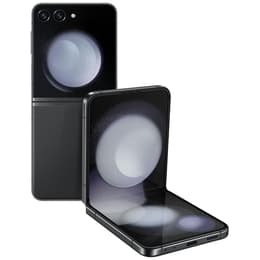
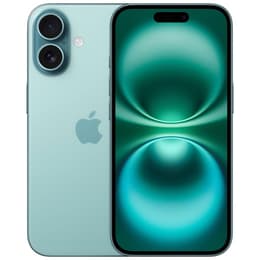
Galaxy Z Flip5 vs iPhone 16

Galaxy Z Flip5
Galaxy Z Flip5
À partir de

Prix reconditionné :333,00 €

contre 1 340,00 € neuf

Voir les options
iPhone 16
iPhone 16
À partir de

Prix reconditionné :549,00 €

contre 869,00 € neuf

Voir les options

Notes

The Samsung Galaxy Z Flip5, released in August 2023, and the iPhone 16, launched in September 2024, represent distinct approaches to modern smartphone design. The Z Flip5 offers a unique foldable clamshell form factor running on Android, while the iPhone 16 maintains a traditional slab design powered by Apple's iOS. These devices cater to different user preferences, primarily differing in their physical design, operating system ecosystems, and specific hardware capabilities.

Scores

Durabilité

When considering the long-term usability of these devices, both the Galaxy Z Flip5 and the iPhone 16 offer robust software support and improved physical resilience.

  • Software Longevity: The Galaxy Z Flip5 launched with Android 13 and is committed to receiving four generations of Android OS upgrades, extending its support through Android 17 and security updates until 2028. The iPhone 16, released with iOS 18, typically receives software updates for five to six years from its launch, potentially offering a slightly longer period of the latest iOS features.
  • Physical Durability: The iPhone 16 features a Ceramic Shield front cover, noted for its enhanced scratch resistance and overall toughness compared to previous generations. The Galaxy Z Flip5 utilizes Gorilla Glass Victus 2 for its cover screen, showing good scratch resistance, and its hinge design has demonstrated resilience in bend tests. Both devices offer water resistance, with the iPhone 16 rated IP68 for dust and water resistance.
  • Repairability: Both manufacturers have made strides in making their devices more repair-friendly. The iPhone 16 has received a repairability score of 7 out of 10 from iFixit, a notable improvement, partly due to its 'open from front and back' design and new battery adhesive. The Galaxy Z Flip5 also shows improved repairability with a score of 6.5 or 7.5 out of 10, aided by the inclusion of battery pull tabs.

Année de sortie

2023

2024

Compatible dernière mise à jour

Oui

Oui

Pliable

Oui

Non

Performances

The performance of a smartphone is crucial for daily tasks, and both the Galaxy Z Flip5 and iPhone 16 deliver responsive experiences, though with different underlying architectures.

  • Processing Power: The Galaxy Z Flip5 is equipped with a processor designed for high-end Android devices, enabling smooth multitasking, efficient app launches, and capable handling of graphically intensive games. The iPhone 16 features Apple's A18 chip, which provides substantial power for demanding applications, advanced computational photography, and the integration of Apple Intelligence features.
  • Multitasking and Responsiveness: Both phones offer ample memory for fluid navigation between applications. The iPhone 16 typically comes with 8GB of RAM, while the Galaxy Z Flip5 also features 8GB of RAM in its standard configuration, ensuring that most users will experience minimal slowdowns during everyday use.
  • Storage Options: Users can choose from various internal storage capacities for both models. The Galaxy Z Flip5 is available with 256GB or 512GB of storage. The iPhone 16 offers options including 128GB, 256GB, and 512GB, catering to different storage needs.
  • Battery Behavior: The Galaxy Z Flip5 houses a 3700 mAh battery, supporting wired and wireless charging. The iPhone 16 is equipped with a 3561 mAh battery, and its internal design has been re-engineered for better heat dissipation and improved battery life. Real-world battery performance will vary based on usage patterns, but both are designed to last through a typical day for most users.

Mémoire (Go)

8 Go

8 Go

Qualité de l'écran

The visual experience is a key aspect of any smartphone, and these two devices offer distinct display technologies and characteristics.

  • Display Technology: The Galaxy Z Flip5 features a 6.7-inch Foldable Dynamic AMOLED 2X main display, known for its vibrant colors, deep blacks, and high contrast. The iPhone 16 sports a 6.1-inch Super Retina XDR OLED display, also delivering excellent color accuracy and contrast.
  • Refresh Rate and Smoothness: The Galaxy Z Flip5's main display boasts a 120Hz refresh rate, providing a noticeably smoother scrolling and gaming experience. In contrast, the iPhone 16 maintains a 60Hz refresh rate, which is standard but less fluid than higher refresh rate displays.
  • Brightness and Clarity: Both phones offer impressive brightness levels for outdoor visibility. The Galaxy Z Flip5 can reach up to 1750 nits peak brightness. The iPhone 16's display can achieve up to 2000 nits peak outdoor brightness, ensuring content remains clear even in bright sunlight. The iPhone 16 has a resolution of 2556x1179 pixels, resulting in a pixel density of approximately 460 ppi, while the Z Flip5 has a resolution of 1080 x 2640 pixels, with a pixel density of around 426 ppi.
  • Unique Features: A significant differentiator for the Z Flip5 is its larger cover screen, allowing for more functionality and interaction when the phone is closed. The iPhone 16 continues to feature the Dynamic Island, integrating alerts and activities into a dynamic area at the top of the display.

Résolution

1080 x 2640

1179 x 2556

Type d'écran

Foldable Dynamic AMOLED 2X

Super Retina XDR OLED

Audiovisuel

Photography and videography capabilities are often a deciding factor, and both the Galaxy Z Flip5 and iPhone 16 offer advanced camera systems tailored to different user needs.

  • Rear Camera System: The Galaxy Z Flip5 features a dual 12 MP camera setup, consisting of a wide-angle lens with optical image stabilization (OIS) and an ultrawide-angle lens. The iPhone 16 comes with an advanced dual-camera system, including a 48 MP Fusion Main camera with sensor-shift OIS and a 12 MP ultrawide camera. The 48 MP main sensor on the iPhone 16 can also achieve 2x optical-quality telephoto shots.
  • Photography Performance: The iPhone 16's larger main sensor and computational photography excel in capturing detailed images, especially in varying lighting conditions, and offer features like Smart HDR 5. The Galaxy Z Flip5's cameras deliver vibrant photos, with features like Night Mode for low-light situations and FlexCam for unique shooting angles using its foldable design.
  • Video Recording: Both devices are capable of high-quality video recording. The iPhone 16 supports 4K video recording at up to 60 frames per second with Dolby Vision HDR. The Galaxy Z Flip5 also records 4K video at 60 frames per second and offers features like Director's View.
  • Front Camera and Audio: For selfies, the Galaxy Z Flip5 has a 10 MP front camera, while the iPhone 16 features a 12 MP TrueDepth front camera with advanced features like Face ID. Both phones provide stereo speakers for media consumption, and their microphones are designed for clear audio capture during calls and recordings.

Caméra principale

12 megapixels

48 megapixels

Caméra frontale

10 megapixels

12 megapixels

Divers

Beyond the core features, several practical elements contribute to the overall user experience of these smartphones.

  • Connectivity: Both devices support 5G cellular networks, ensuring fast data speeds. The Galaxy Z Flip5 includes Wi-Fi 6 and Bluetooth 5.3. The iPhone 16 supports Wi-Fi 6E or Wi-Fi 7 (depending on region/model) and Bluetooth 5.3, offering advanced wireless capabilities.
  • Ports and Biometrics: The Galaxy Z Flip5 features a USB-C 2.0 port and a side-mounted fingerprint sensor for secure unlocking. The iPhone 16 also uses a USB-C 2.0 port with DisplayPort capabilities and relies on Face ID for biometric authentication.
  • Design and Handling: The Galaxy Z Flip5's foldable design allows it to be more compact when closed, making it highly portable. It weighs 187 grams. The iPhone 16, with its traditional slab design, measures 147.6 x 71.6 x 7.8 mm and weighs 170 grams, offering a comfortable one-handed grip. The iPhone 16 also introduces a new customizable Action Button and a dedicated Camera Control button.
  • Build Materials: The Galaxy Z Flip5 features an aluminum frame and Gorilla Glass Victus 2. The iPhone 16 uses an aluminum frame and its Ceramic Shield front.

Poids (en grammes)

187 g

170 g

Taille écran (pouces)

6.7

6.1

Réseau

5G

5G

Carte SIM

SIM physique + eSIM

eSIM

Verrouillage opérateur

Débloqué tout opérateur

Débloqué tout opérateur

User feedback often highlights the distinct advantages of each device. For the Galaxy Z Flip5, common praise centers on its unique foldable design, which offers enhanced portability and creative photographic opportunities with its FlexCam feature. Users appreciate the larger cover screen for quick interactions without opening the phone. Criticisms sometimes point to the inherent durability concerns of foldable screens compared to traditional phones, and some users desire a larger battery capacity.

The iPhone 16 is frequently lauded for its consistent performance, the reliability of its iOS ecosystem, and its significantly improved camera system, particularly the 48 MP main sensor and new Camera Control button. Its enhanced repairability is also a positive point for many. Some users might express a desire for a higher refresh rate display on the base model or a more innovative design compared to its predecessors.

Users prioritizing a compact, stylish device with a unique form factor and a versatile Android experience will find the Galaxy Z Flip5 well-suited to their needs. Its ability to stand on its own for hands-free use and its interactive cover screen offer distinct benefits. Conversely, users who value a consistently powerful and durable traditional smartphone experience, with a strong emphasis on camera performance and long-term software support within the Apple ecosystem, may lean towards the iPhone 16. Both devices represent quality choices, and considering a quality-assured refurbished option for either model can be an eco-friendly alternative to extend their lifecycle.

Découvrez tous nos articles

Nos comparaisons récentes